Disclosure: This post contains affiliate links. If you make a purchase through one of these links, we may earn a small commission at no additional cost to you. As an Amazon Associate, we earn from qualifying purchases.
Every kitchen has one: the drawer that sticks halfway because a ladle handle is jammed sideways, the one where the can opener hides under three takeout menus, the one you open, sigh at, and close again. Most of us respond the same way each time. We buy another gadget, shove things around for ten minutes, and the chaos is back by Thursday.
The problem usually isn’t effort. It’s a handful of common beliefs about kitchen drawers that sound sensible but quietly work against you. Below are the five we hear most often, why they don’t hold up, and what to do instead.
Myth #1: You Need More Drawer Space
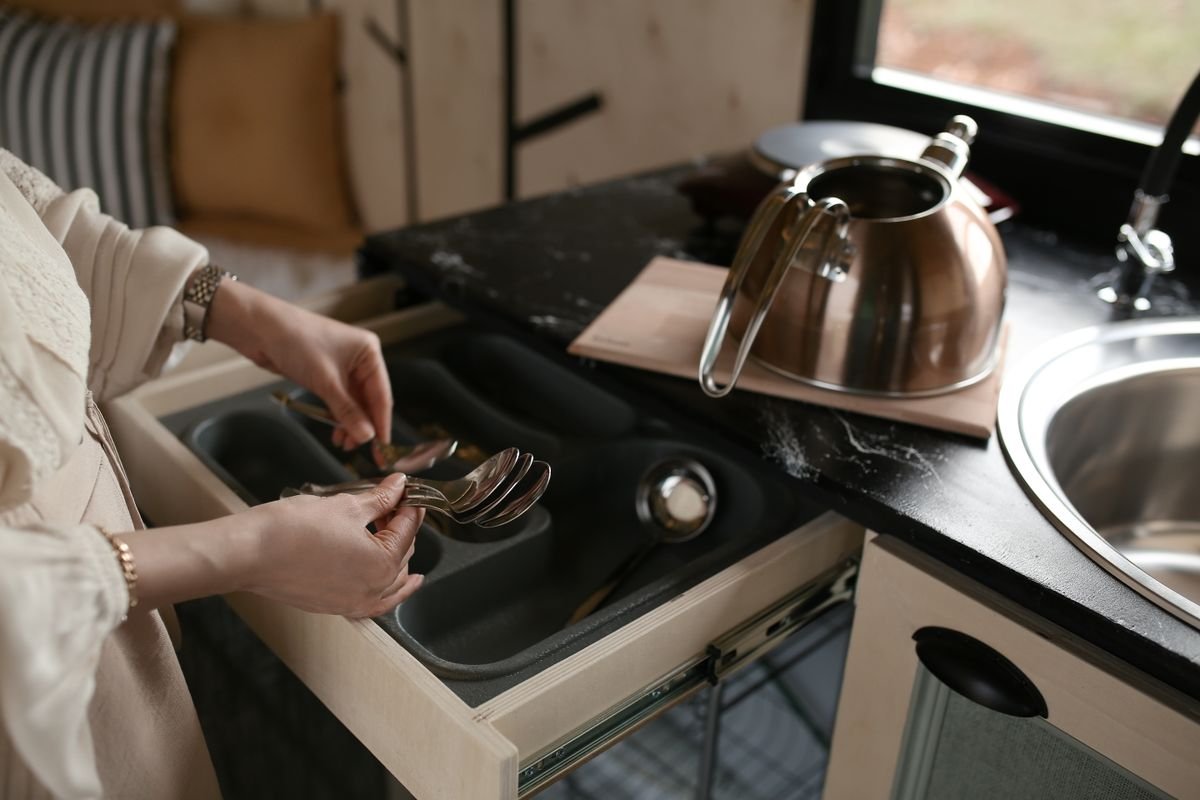
The reality: most cluttered drawers aren’t too small. They’re carrying duplicates. Pull everything out of your main utensil drawer and lay it on the counter grouped by type. It’s very common to find three vegetable peelers, two pizza cutters, a drawer’s worth of mismatched measuring spoons, and four spatulas when you only ever reach for one.
Try this: keep the one you actually use from each group, plus a backup only for things you use daily and that wear out (like a peeler). Everything else goes into a donation box. If you’re nervous about letting go, put the extras in a labeled bin in the garage for 60 days. If you never open the bin, donate it without looking inside. Most people free up a third of the drawer before buying a single organizer.
Myth #2: Any Organizer Tray Will Fix It
The reality: a tray that doesn’t fit your drawer creates new problems. Too small, and it slides forward every time you yank the drawer open, while loose items collect in the gap behind it. Too tall, and the drawer above scrapes the handles. Fixed-size trays are designed for an “average” drawer that very few kitchens actually have.
Try this: measure the inside of the drawer, not the front panel: width wall to wall, depth front to back, and the usable height (close the drawer and check clearance against the frame above). Then choose an organizer that expands to fill the width so nothing can shift. Leave roughly half an inch of play so the tray goes in and out easily for cleaning. Assign compartments by frequency, with forks and spoons in the slots closest to you and rarely used pieces like the cake server at the back.
Pipishell Expandable Bamboo Silverware Organizer (Large)

If your current tray slides around or leaves dead space on the sides, an expandable organizer solves the fit problem from Myth #2: it widens until it meets the drawer walls, so nothing shifts when you open the drawer.
- Expands to fit — adjusts from about 13 to 19.6 inches wide to match your drawer
- 6 to 8 compartments — room for flatware plus longer tools along the extending side sections
- Bamboo build — sturdy and easy to wipe clean with a damp cloth
Check Current Price on Amazon →
As an Amazon Associate we earn from qualifying purchases. Price and availability may change.
Myth #3: Every Utensil Belongs in a Drawer
The reality: long, bulky tools like ladles, whisks, tongs, and wooden spoons are the main reason drawers jam. They don’t fit neatly in standard compartments, they tangle, and you end up digging for them mid-recipe while something burns.
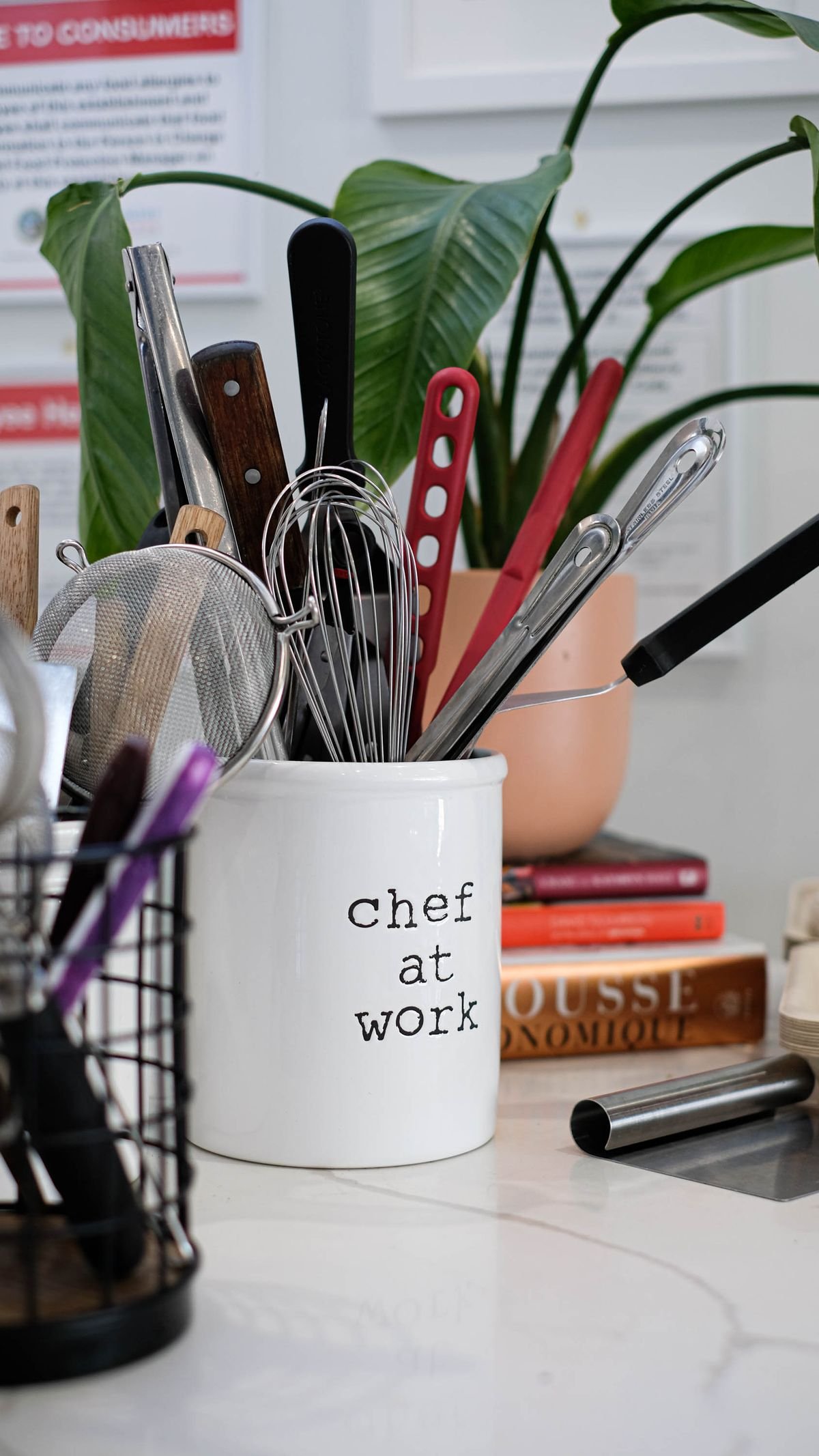
Try this: move your five to eight most-used cooking tools into a sturdy crock right next to the stove. That’s where you need them, and you can grab one with one hand. Pick a crock with a heavy base so it doesn’t tip when you pull out tongs. The rule that keeps it from turning into countertop clutter: if a tool hasn’t left the crock in a month, it goes back into a drawer or out of the house. Your drawer instantly gets lighter and closes properly again.
Myth #4: The Junk Drawer Is a Lost Cause
The reality: the junk drawer isn’t a failure. It’s a real need, because every home has batteries, rubber bands, tape, and spare keys that don’t belong anywhere else. It only becomes a mess when it has no structure and no limits.
Try this: give it a job description. Line it with a few small open bins (old jar lids and small food containers work fine) and decide on four or five categories: tools, tape and glue, batteries and chargers, keys, and “pending” for things you aren’t sure about yet. When the pending bin is full, sort it. Once a month, set a five-minute timer, toss dried-out pens and mystery screws, and put everything back in its bin. A junk drawer with categories is just a utility drawer with a funny name.
Myth #5: Deep Drawers Are Only for Pots
The reality: deep drawers are often the most versatile storage in the kitchen, but stacking things in them wastes them. Anything at the bottom of a pile is effectively lost.
Try this: think vertically. Store baking sheets, cutting boards, and pot lids on their edges, like files in a cabinet, using simple dividers or a tension rod. Nest food storage containers by shape and keep their lids standing upright in a separate section. Use shallow top drawers for flat, frequently used items (flatware, measuring spoons, wraps) and save the deep drawers for anything taller than your hand. The goal is that you can see and lift out any single item without moving another one first.
The Short Version
A calm kitchen drawer comes down to a few simple moves: cut duplicates before buying anything, choose an organizer that actually fits the drawer (an expandable bamboo tray handles odd widths well), move bulky cooking tools to a crock by the stove, give the junk drawer categories and a monthly reset, and store things on their edges in deep drawers. Start with one drawer this weekend. Once you feel the difference of opening it without a fight, the rest of the kitchen tends to follow.
Which kitchen drawer myth were you living by? And what’s the strangest thing hiding in your junk drawer right now? Tell us in the comments below.
Leave a Reply