Disclosure: This post contains affiliate links. If you make a purchase through one of these links, we may earn a small commission at no additional cost to you. As an Amazon Associate, we earn from qualifying purchases.
Most linen closets don’t have a storage problem. They have a quantity problem. Somewhere behind that door are fitted sheets for a mattress you sold years ago, a stack of thin towels nobody reaches for, and a duvet that only comes out when relatives visit. No shelf riser or basket can fix a closet that simply holds more than a household uses.
So instead of starting with containers, this guide starts with numbers. Below you’ll find realistic counts for sheets, towels, pillowcases and blankets, a quick way to audit what you own, and a shelf plan that keeps the right amount within reach.
The Short Answer: A Realistic Linen Count
These numbers assume you do laundry about once a week. If you wash more often, you can go lower; if laundry day tends to slip, add one more of each.
| Item | How many | Why this number works |
|---|---|---|
| Sheet sets | 2 per bed | One on the bed, one clean and ready |
| Guest sheet set | 1 per guest bed | Lives with the guest room, not the main stack |
| Extra pillowcases | 2 per bed | They wear out and stain faster than sheets |
| Bath towels | 2 per person | One in use, one in the wash |
| Hand towels | 2–3 per bathroom | They get changed more often than bath towels |
| Washcloths | 4–6 per person | Small, cheap, and used daily |
| Guest towels | 1 set per expected guest | A matching set saves the frantic search |
| Spare blankets | 1 per bed + 1–2 throws | Covers cold snaps and sick days |
For a couple with one guest room, that works out to roughly six sheet sets, eight bath towels and three or four blankets. Most closets hold far more than that, which is exactly why they overflow.
Step 1: Count What You Actually Have
Pull everything out and sort it into piles by category: sheets, pillowcases, bath towels, hand towels, washcloths, blankets, and “other” (table linens, beach towels, the mystery fabric). Then write down a count next to each pile. Seeing “14 bath towels” on paper when the table above says eight is far more persuasive than a vague sense that the shelf is full.
While you count, check each item against three quick questions: Does it fit a bed or bathroom you still have? Is it in good shape, without holes, stretched elastic or stubborn stains? Would you actually choose it over the others in the pile? Anything that fails one of those questions is a candidate to leave.
Step 2: Keep the Best, Not the Oldest
Once you know your target number, keep your favorites up to that count. People tend to hold onto the oldest linens out of habit and save the nicest ones “for good.” Flip that. Use the soft towels and the sheets you love every week, and let the worn-out backups go. If you’d like a small reserve, keep just one extra set of each item rather than a whole second shelf.
Step 3: Give Bulky Bedding Its Own Home
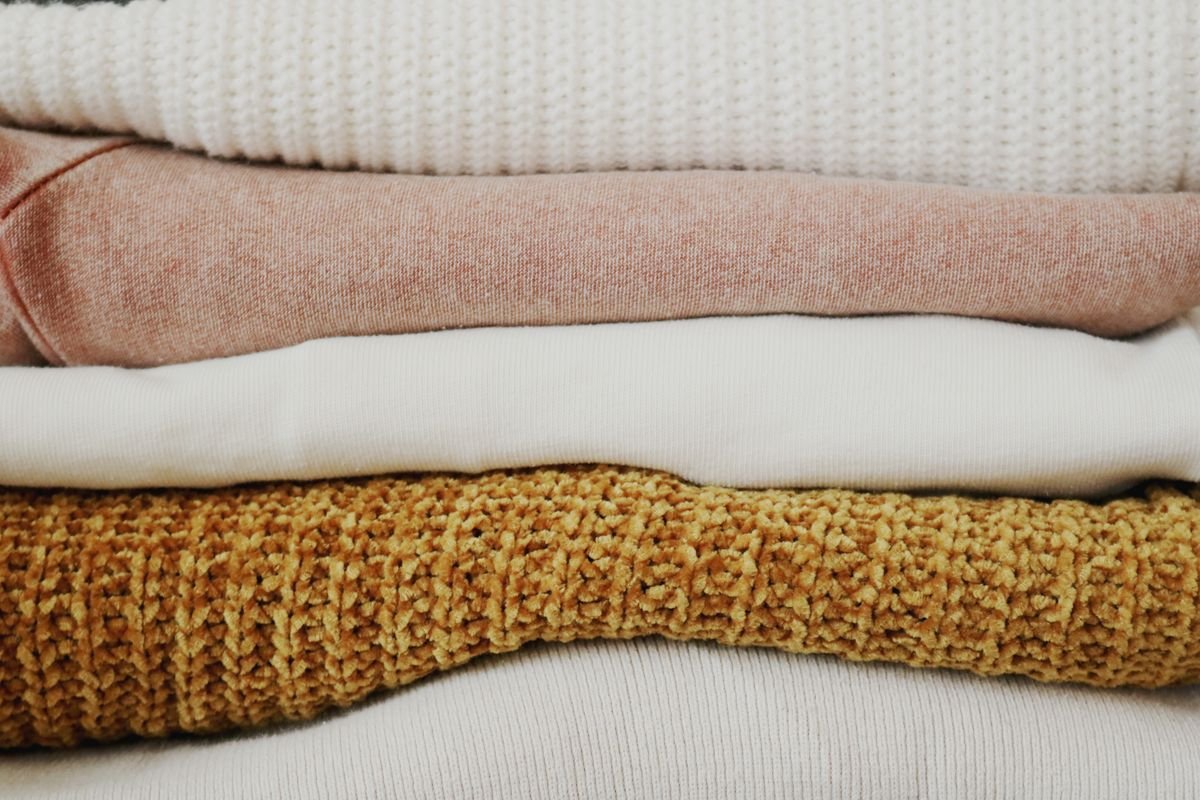
Comforters, duvets and winter blankets are the real space hogs. A single king comforter can swallow an entire shelf. Since most households only swap these seasonally, they don’t need prime, eye-level real estate. Fold them into soft, zippered storage bags and move them to the top shelf, the closet floor, or under a bed. A bag with a clear window lets you see what’s inside without unzipping every one.
Lifewit 3-Pack 100L Blanket Storage Bags

If comforters and spare blankets are crowding out your everyday sheets and towels, these soft zippered bags let you pack bulky bedding into neat, stackable cubes that slide onto a top shelf or the closet floor.
- Sized for bedding — each bag holds about 100 liters, roomy enough for a comforter, a duvet or a couple of thick blankets
- Clear front window — see what’s inside at a glance, no unzipping and digging
- Easy to move — reinforced side handles and two-way zippers make pulling them down from a high shelf simple
Check Current Price on Amazon →
As an Amazon Associate we earn from qualifying purchases. Price and availability may change.
Step 4: Store Sheets as Complete Sets
Loose fitted sheets, flat sheets and pillowcases scattered across a shelf are the reason making the bed turns into a scavenger hunt. Fold the fitted sheet, flat sheet and one pillowcase, then tuck everything inside the second pillowcase. You end up with one tidy bundle per set, and grabbing a fresh set takes seconds. Label the shelf edge by bed size (Queen, Twin, Guest) so nobody mixes them up.
Step 5: Arrange Shelves by How Often You Reach
With the counts settled, the layout almost designs itself:
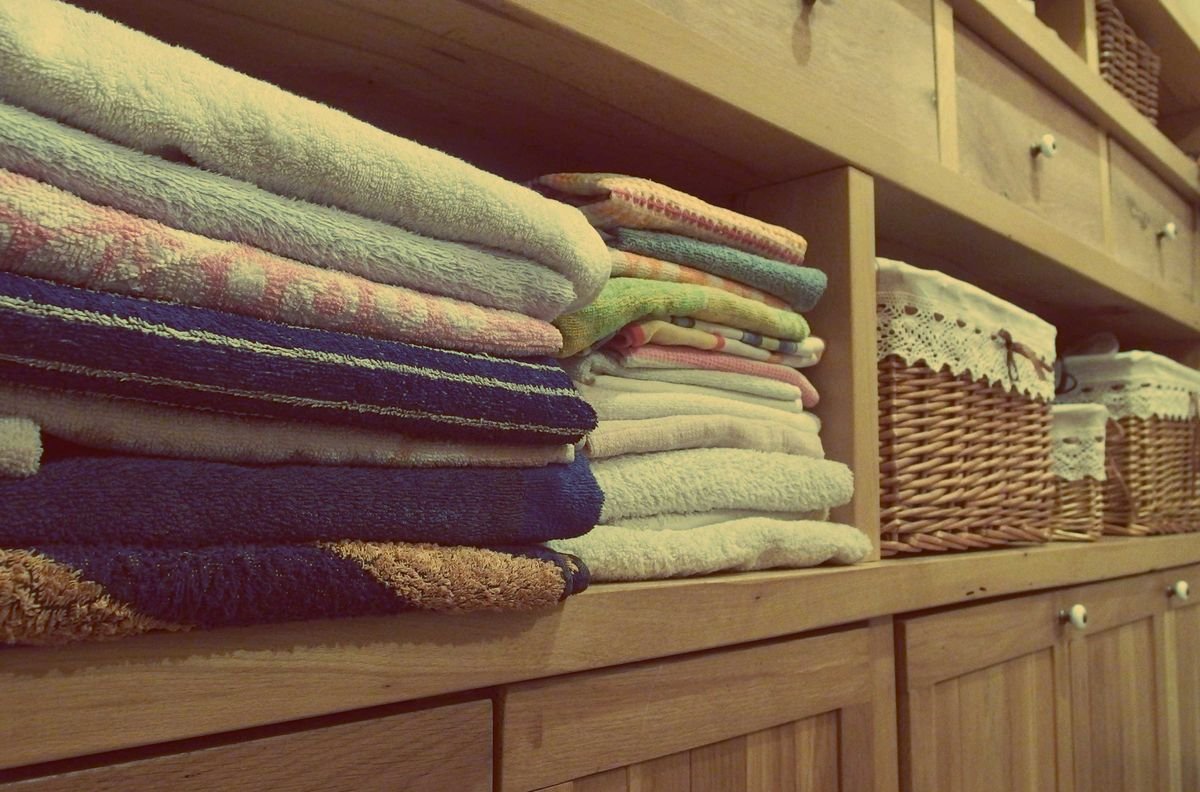
- Eye level: bath towels and the sheet sets you use weekly.
- Waist level: hand towels and washcloths, ideally in an open basket so kids can reach them too.
- Top shelf: guest linens, seasonal blankets and bagged comforters.
- Floor: a laundry basket or a bin of backup toiletries if space allows.
Leave a little breathing room on each shelf. A closet packed edge to edge looks organized for a week, then collapses the first time someone pulls a towel from the bottom of a stack.
What to Do With the Extras
Linens in good condition can go to a local shelter or a donation center. Worn towels and sheets are often welcome at animal shelters and rescues, which use them for bedding and cleanup, so call ahead and ask what they accept. Anything too far gone can become cleaning rags. Keep a few in a small bin in the garage or under the sink and recycle the rest through a textile drop-off if your area has one.
The Takeaway
A calm linen closet starts with a number, not a product. Two sheet sets per bed, two bath towels per person, one spare blanket per bed, and a single small reserve is enough for most homes. Count what you have, keep your favorites up to that number, give bulky bedding a home of its own, and arrange the rest by how often you reach for it. The closet will stay tidy because there’s simply less to keep tidy.
How many towels are hiding in your linen closet right now? Share your count, or your favorite folding trick, in the comments below.