Disclosure: This post contains affiliate links. If you make a purchase through one of these links, we may earn a small commission at no additional cost to you. As an Amazon Associate, we earn from qualifying purchases.
The laundry room is one of the smallest spaces in most homes, and somehow it still ends up holding a mountain of unsorted socks, three half-empty detergent bottles, and a basket that’s been “about to be folded” since Tuesday. Laundry space comes up more than almost any other room in home-organization questions — probably because it’s a room people walk through several times a day, so the clutter is impossible to ignore.
Instead of another generic tips list, here are the questions we see asked most often about laundry room organization, answered one by one. Whether you have a full laundry room or a stacked washer-dryer tucked into a closet, these should give you a clear starting point.
1. What’s the first thing I should do when organizing a laundry room?
Empty it out completely before you buy a single storage bin. It sounds tedious, but laundry rooms accumulate orphaned items — a lone sock, a dried-up stain pen, a coupon for detergent that expired two years ago — faster than almost any other space in the house. Take everything off shelves and out of cabinets, wipe the surfaces down, and only put back what you actually use during a wash cycle. Everything else either gets a new home elsewhere in the house or goes in the donate/trash pile. Buying containers for clutter you haven’t sorted yet just means you end up with organized clutter, which isn’t really progress.
2. My laundry space is tiny — a closet with a stacked washer and dryer. What can I actually do?
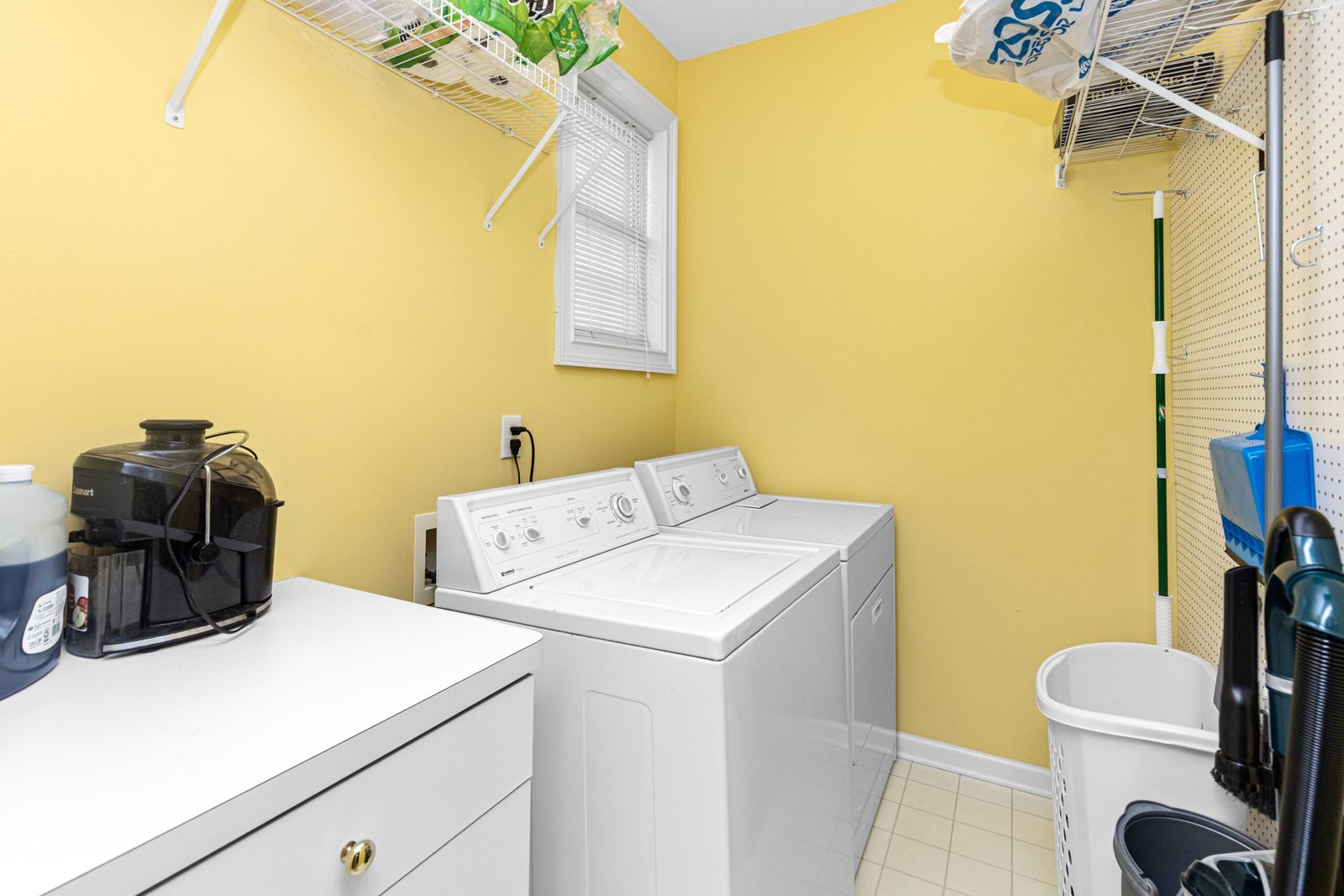
Small laundry closets benefit the most from going vertical, since floor space usually doesn’t exist. A slim rolling cart that fits in the gap beside the machines can hold detergent, dryer sheets, and stain remover without eating into walking room. Over-the-door organizers work well on the closet door itself for smaller items like lint rollers and clothespins. And if there’s any wall space at all above or beside the machines, a fold-away drying rack (more on that below) gives you drying capacity without permanently taking up room the rest of the day.
3. What’s the best way to store detergent and cleaning supplies safely?
Keep laundry chemicals up and out of reach if there are kids or pets in the house — a shelf above the machines is safer than a low bin, even a “childproof” one. Beyond safety, group supplies by function: one container for everyday detergent and softener, a small caddy for stain treatment (pen, spray, spare toothbrush), and a third spot for anything used only occasionally, like wool wash. You’ll stop rummaging through five bottles to find the one you actually need.
4. Should I sort laundry before it gets to the laundry room, or once it’s there?
Sorting earlier saves time later. A three-bin hamper system in the bedroom or bathroom (whites, darks, and delicates, or however your household splits it) means laundry arrives at the machine already separated, instead of turning into a sorting project every wash day. If a multi-bin hamper isn’t practical everywhere, even a simple habit of tossing dark clothes and light clothes into two separate baskets makes a noticeable difference by the time laundry day comes around.
5. How can I make drying clothes easier without relying only on the dryer?
This is where a wall-mounted drying rack earns its keep, especially for delicates, activewear, or anything that shrinks in the dryer. Floor-standing drying racks work, but they permanently take up space and tend to get shoved in a corner (or a hallway) between uses. A rack that folds flat against the wall solves that: you unfold it to dry a load, then fold it back down when you’re done, and the floor space is yours again the rest of the time. It’s a small change that makes air-drying realistic instead of something you mean to do but never get around to.
Vikaqi Wall Mounted Clothes Drying Rack (32″)
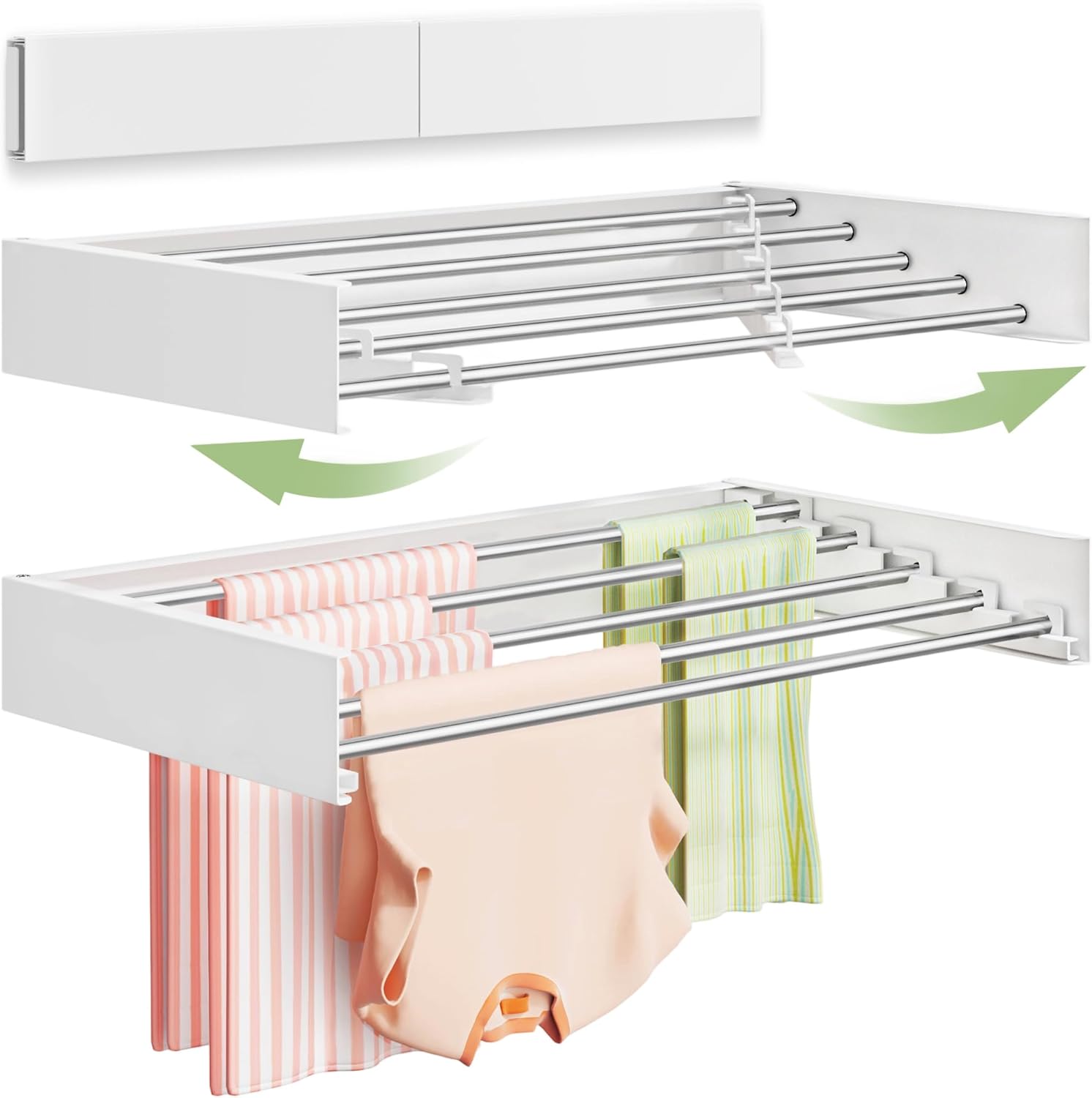
For a laundry room or closet that has wall space but no floor space to spare. It holds a 4.6-star rating from over 1,300 reviewers and has Amazon’s Choice status in its category.
- Folds flat against the wall — you unfold it for a load, then fold it back and the floor space is yours again
As an Amazon Associate we earn from qualifying purchases. Price and availability may change.
6. What actually solves the “lost socks and stray items” problem?
A dedicated shallow bin labeled “lost socks” (or lint rollers, or spare buttons, or whatever tends to go missing) does more than any amount of willpower. The trick is making it genuinely easy to toss a stray item in mid-fold, rather than setting it “for later” on top of the dryer, where it becomes clutter instead of getting solved. A lot of laundry-room mess isn’t from a lack of storage — it’s from storage that’s one step too inconvenient to actually use.
7. How often should I actually declutter the laundry room?
Twice a year is usually enough for most households — once when you switch out seasonal items (heavy blankets, ski gear, beach towels) and once around spring cleaning. During each pass, check expiration dates on stain removers and specialty detergents, toss dryer sheets or fabric boxes that have been open long enough to lose scent, and reassess whether the bins and baskets you set up are still matching how the room actually gets used. Organization systems that made sense a year ago don’t always hold up once habits change.
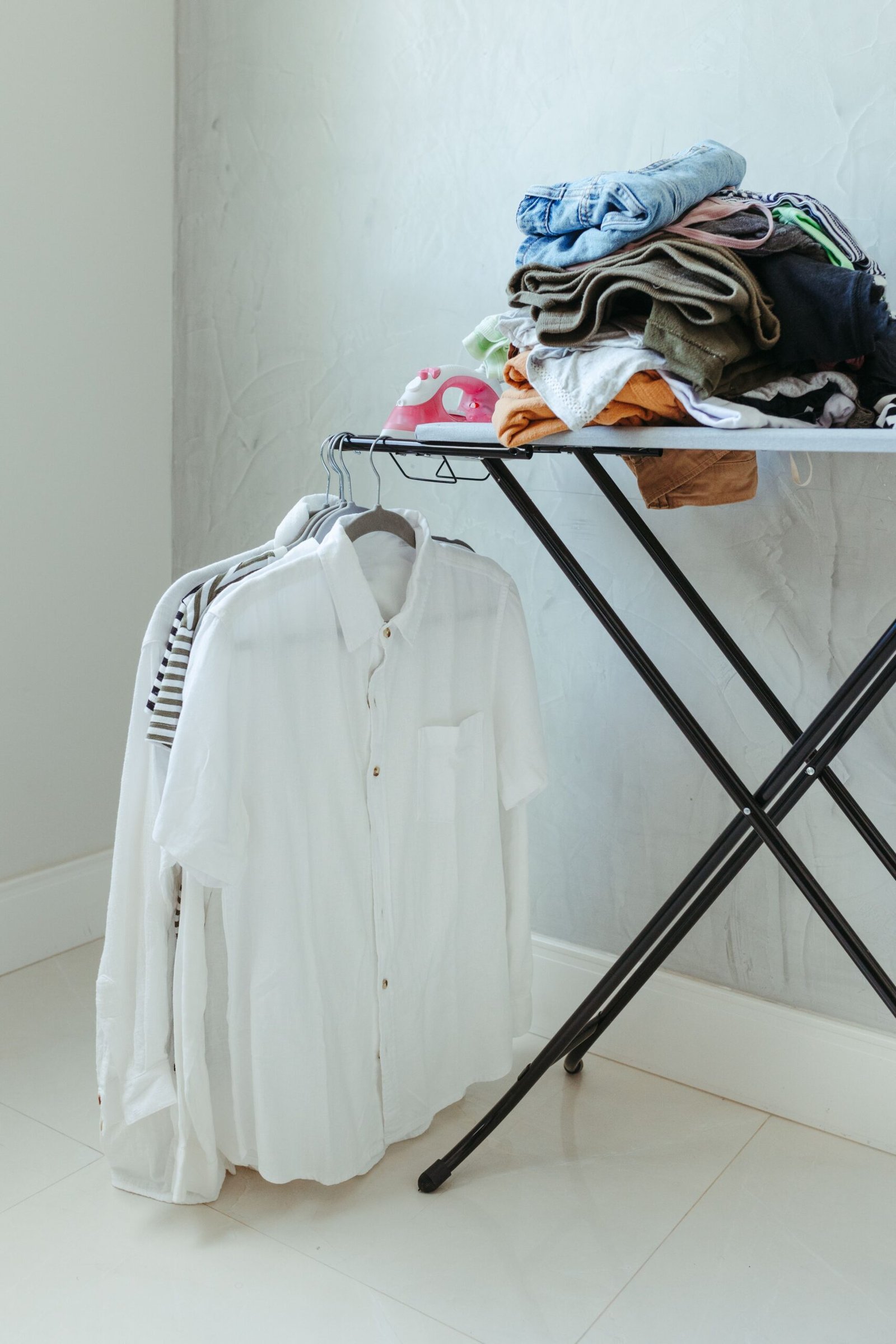
None of these fixes require a full renovation — most come down to matching your storage to how the room is actually used, and giving stray items a specific place to land instead of a general “somewhere.” Start with whichever question above matches your biggest headache right now, and the rest tends to fall into place over a few wash cycles.
Have a laundry room quirk we didn’t cover, or a system that works surprisingly well in a small space? Tell us about it in the comments — we’re always looking for real-world setups to feature in future posts.