Disclosure: This post contains affiliate links. If you make a purchase through one of these links, we may earn a small commission at no additional cost to you. As an Amazon Associate, we earn from qualifying purchases.
The entryway is the hardest-working few square feet in most homes. Everything that comes in or goes out passes through it: shoes, coats, bags, mail, keys, dog leashes, the umbrella nobody remembers to dry. And because it is usually small and right next to the door, it is also the first place clutter piles up and the last place anyone thinks to fix.
The good news: you do not need a mudroom or a renovation to get a calm, functional entry. You need one focused weekend and a plan. Below is the exact sequence we recommend, broken into five steps with rough time estimates, so you can work through it on a Saturday and enjoy the result on Monday morning.
Step 1 (Friday evening, 30 minutes): Watch how your entry is really used
Before you buy or move anything, spend one evening simply noticing. When people walk in, where do their shoes land? Where do bags get dropped? Where does the mail end up? Jot it down. The goal is to design around the habits your household already has instead of fighting them. If everyone kicks their shoes off to the left of the door, that is where the shoe storage should go, not across the hallway where it looks nicer.
Also count what genuinely needs a home here. A useful rule of thumb: each person who uses the door daily needs one hook, one spot for two pairs of everyday shoes, and one small landing place for keys and pocket items. Anything beyond that is a candidate for storage elsewhere.
Step 2 (Saturday morning, 1–2 hours): Empty it and edit hard
Take everything out of the entry: every shoe, coat, bag and basket. Wipe the floor and baseboards while the space is bare (this is usually the dirtiest floor in the house). Then sort what you removed into three piles:
- Daily use: goes back to the entry.
- Seasonal or occasional: winter boots in July, the spare umbrella, sports gear. Move these to a closet, the garage or an under-bed bin.
- Done: shoes nobody wears, freebie tote bags, expired coupons. Donate, recycle or toss.
Most people are surprised that the daily-use pile is less than half of what was there. That is the whole point: an entryway feels cluttered not because it lacks storage, but because it stores things that should live somewhere else.
Step 3 (Saturday midday, 1 hour): Go vertical with hooks and a shelf
Floor space is precious in an entry, and walls are almost always underused. A row of sturdy hooks at roughly shoulder height handles coats, bags and leashes, and a shelf above it catches hats, gloves or a small basket for sunglasses. Add a second, lower row of hooks if you have kids, so they can hang their own things without help (which is the only way a system survives a school year).
Mount into studs or use proper anchors: a fully loaded coat rack in winter is heavier than it looks. And resist the urge to install ten hooks for a household of three. Extra hooks just invite extra coats.
HBCY Creations Solid Wood Wall-Mounted Coat Rack with Shelf

If you only add one thing to your entry this weekend, make it a hook rack with a built-in shelf. This one combines both in a single 24-inch piece, so coats, bags and leashes go on the hooks while hats and small baskets sit on top.
- Two jobs in one — five hooks below and a shelf above, without taking any floor space.
- Solid wood build — a rustic brown finish that suits most entryways and mudrooms.
- Ready to hang — mounting hardware is included in the box.
Check Current Price on Amazon →
As an Amazon Associate we earn from qualifying purchases. Price and availability may change.
Step 4 (Saturday afternoon, 1–2 hours): Contain the shoes and the small stuff
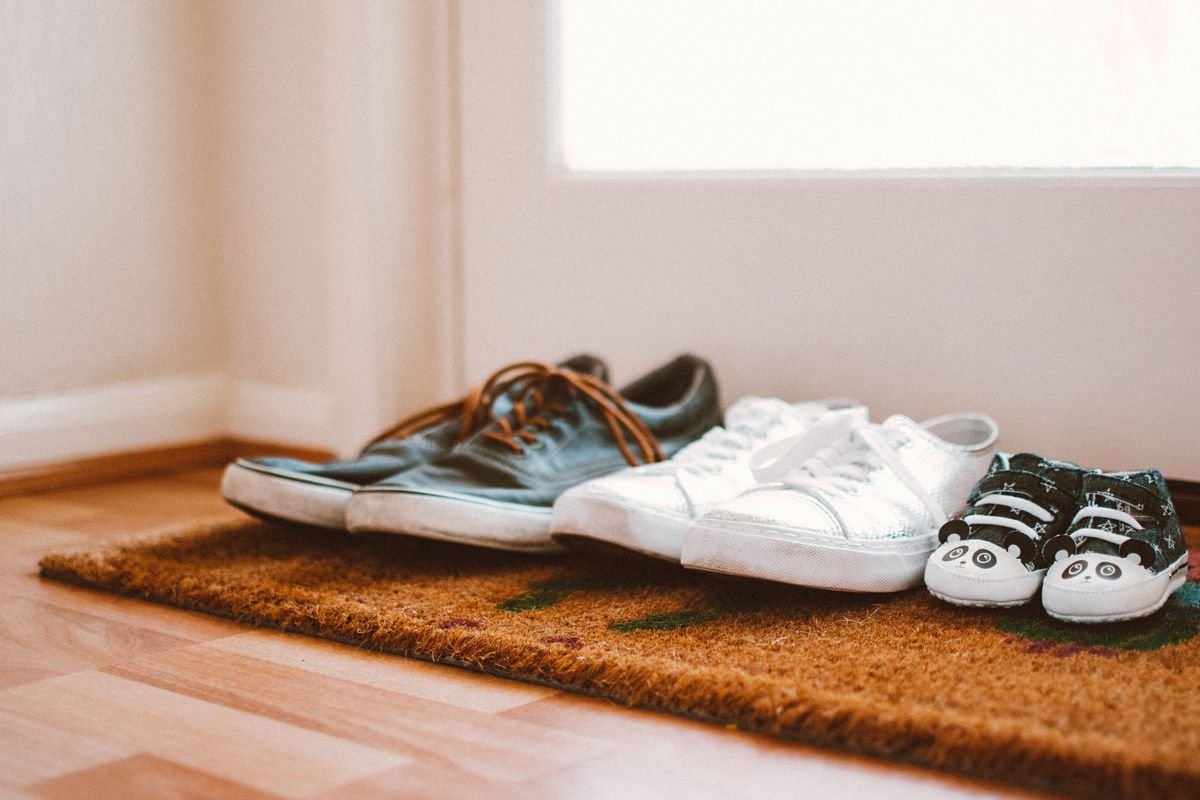
Shoes are the number one source of entryway chaos, so give them a defined boundary. Depending on your space, that could be a low shoe rack, a boot tray, or a bench with cubbies underneath. A boot tray is the cheapest option and works surprisingly well in small apartments: anything outside the tray is visibly out of place, which nudges everyone to tidy up.
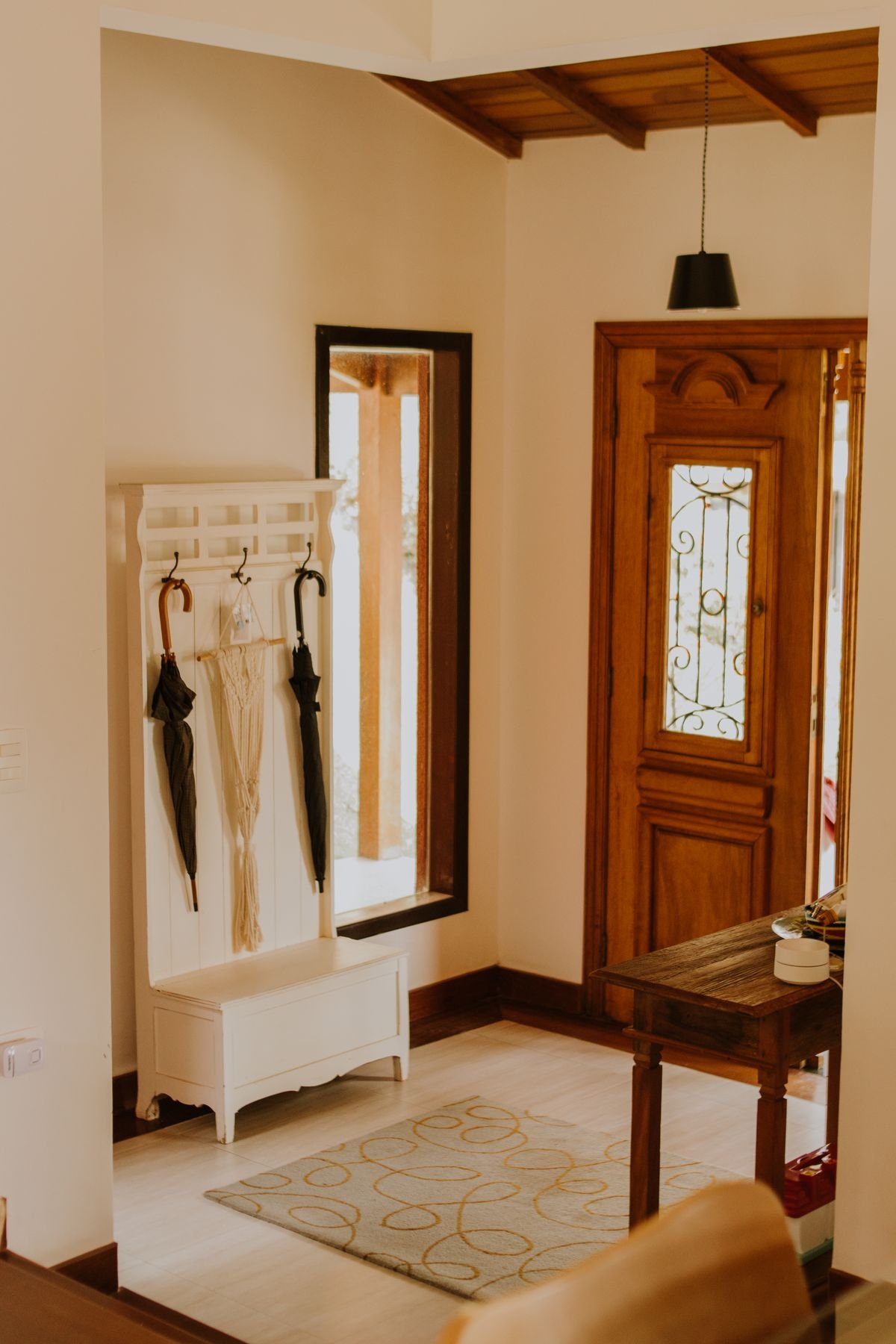
Then handle the small items that disappear: keys, mail, earbuds, dog bags. A tray or shallow bowl on a slim console or wall shelf becomes the landing zone for keys and pocket items. For mail, a single wall pocket or file works better than a flat surface, because flat surfaces collect piles. The rule is simple: if it does not have a container, it will spread.
Step 5 (Sunday, 30–60 minutes): Add a mirror, light and a reset routine
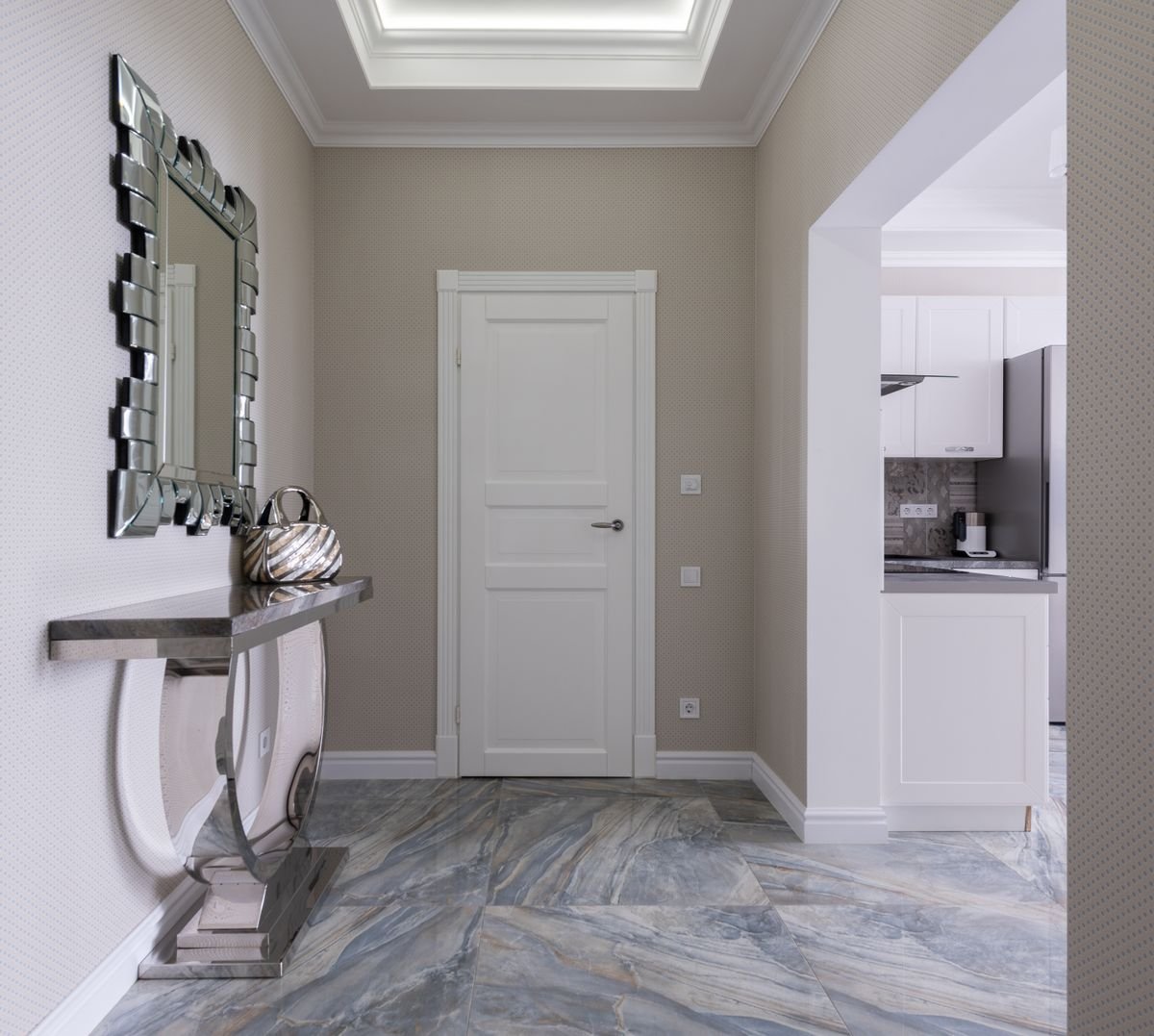
With the functional pieces in place, finish with two small touches that make the space feel intentional. A mirror bounces light around and makes a narrow hallway feel wider (and saves a trip back to the bathroom for a last-minute check). Good lighting, even a plug-in wall sconce or a small lamp on the console, makes the entry welcoming instead of a dark corridor you rush through.
Finally, agree on a two-minute reset. Once a day, ideally in the evening, someone puts stray shoes back in the tray, hangs anything on the floor, and clears the mail pocket. That tiny habit is what separates an entry that stays organized from one that slides back into chaos within two weeks.
Your weekend at a glance
- Friday: observe the traffic patterns and count what really needs a home.
- Saturday: empty, edit, hang hooks and a shelf (we like the HBCY Creations rack), and contain shoes and small items.
- Sunday: add a mirror and light, then start the daily two-minute reset.
An organized entryway changes how your whole home feels the moment you walk in. Start with the edit, keep the system simple, and let the daily reset do the rest.
What is the one thing that always ends up piled by your front door? Tell us in the comments, and we may tackle it in a future post.